More on CCP International Influence
The Federal Bureau of Investigation (FBI) has arrested suspected Chinese government agent Wanying 'Heather' Zhang at Los Angeles International Airport after she allegedly surveilled Taiwanese President Ching-Te Lai's adult son, Ting-Yu Lai, who resides in the Seattle area.
Chairman John Moolenaar of the Select Committee on China has sent a letter to Secretary of State Marco Rubio raising concerns about South Korea's growing alignment with China, which could undermine its own relationship with America. The letter cites increased “[South Korean] semiconductor investment inside [China], and discriminatory treatment of American firms relative to their [China]-linked competitors,” as well as criticism of U.S. forces and dismissive comments on the security situation in Taiwan from South Korean leadership.
In the letter, Moolenaar writes:
Chairman John Moolenaar of the Select Committee on China made the following statement on calls for an agreement with China on AI:
“The Trump Administration is right to limit AI discussion with China to a communication channel for security incidents. The real danger is trusting the CCP. Those advocating we work with the CCP to handcuff American companies should remember that China is engaged in the largest nuclear weapons buildup in history but refuses to engage in arms control talks. They should remember China’s catastrophically unsafe experiments with pathogens, and that the CCP exports its surveillance technology to dictators around the globe. Most importantly, they need to remember that the CCP refuses to honor its agreements and lies to the world—from COVID’s origins, to Hong Kong’s autonomy, to internationally agreed upon borders.
The Select Committee on China has released a video on China’s support for Iran and how it helps the regime in Tehran evade oil sanctions and use satellite imagery to strike U.S. troops.
Yesterday, Chairmen John Moolenaar (R-MI) of the House Select Committee on China and Brian Mast (R-FL) of the House Foreign Affairs Committee sent a letter to Treasury Secretary Scott Bessent and Secretary of State Marco Rubio asking for stronger sanctions against foreign individuals connected to online scam centers.
In the letter, Chairman Moolenaar and Chairman Mast write:
Chairman John Moolenaar (R-MI) of the House Select Committee on China (SCC), Ranking Member Ro Khanna (D-CA), SCC Member Congressman Dan Newhouse (R-WA), and Congressman Jake Auchincloss (D-MA), have reintroduced the CCP Fentanyl Sanctions Act. This legislation cracks down on China-based and CCP-backed entities engaged in drug trafficking by targeting the Chinese chemical manufacturers and online vendors profiting from poisoning Americans.
Chairman John Moolenaar of the Select Committee on China made the following statement on newly declassified files revealing further efforts by the Chinese government to divide American society and influence our elections:
WASHINGTON, D.C. — Today, Chairman John Moolenaar (R-MI) of the House Select Committee on China and Chairman Andrew Garbarino (R-NY) of the Committee on Homeland Security sent a letter to Secretary of Homeland Security Kristi Noem expressing alarm about the International Olympic Committee (IOC)'s ongoing partnership with Alibaba Group—a key piece of the CCP's digital surveillance and censorship state. They were joined by Ranking Member Raja Krishnamoorthi (D-IL) of the House Select Committee on China and Ranking Member Bennie Thompson (D-MS) of the Committee on Homeland Security.
Currently, Alibaba is slated to support the 2028 Olympic Games in Los Angeles.

WASHINGTON DC — Chairman John Moolenaar (R-MI) and Ranking Member Raja Krishnamoorthi (D-IL) of the House Select Committee on the Strategic Competition Between the United States and the Chinese Communist Party urged National Security Advisor, Mike Waltz, to review the potential national security benefits of placing export controls on semiconductor chips critical to the AI infrastructure of People's Republic of China (PRC) company, DeepSeek. As part of the review, the lawmakers also asked to strengthen controls on shipments through third countries that pose a high risk of diversion to the PRC.
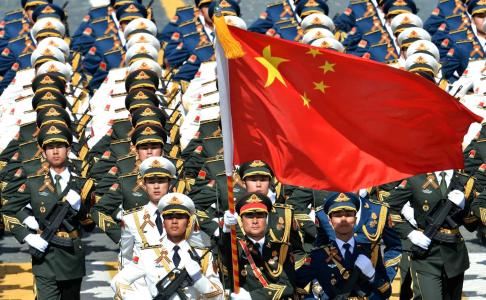
WASHINGTON DC — This week, the Department of Defense (DoD) blacklisted dozens of Chinese companies operating in the U.S. that are a part of the People's Republic of China's military apparatus. Over the last two years, through investigations, reports, and legislation, the Select Committee on the Chinese Communist Party put a spotlight on over 70% of the Chinese companies on the latest iteration of the DoD blacklist.
In case you missed it, Select Committee Chairman John Moolenaar (R-MI) joined Fox Business to discuss the blacklist and its implications for U.S. national security.