More on American Business
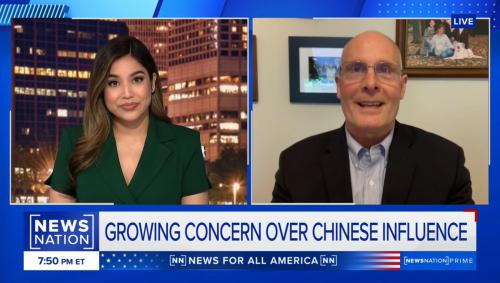
WASHINGTON DC -- In case you missed it, Chairman John Moolenaar (R-MI) of the House Select Committee on the Chinese Communist Party joined NewsNation's Prime over the weekend to discuss the Chinese Communist Party's purchase of land near U.S. military bases (including Chinese company Gotion in Michigan), tax rebates for the export of fentanyl into the U.S., and its authoritarian alignment with Russia, Iran and North Korea.

On Friday, July 26th at 10:00 AM ET Congressman John Moolenaar hosted a roundtable in Green Charter Township on Chinese electric vehicle battery manufacturer Gotion High Tech's troubling connections to the Chinese Communist Party (CCP) and the risks its planned facility in Michigan poses to America.
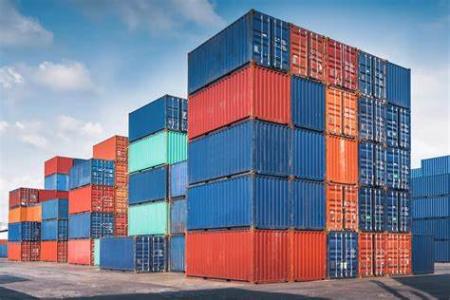
WASHINGTON, D.C.-- Chairman John Moolenaar (R-MI), alongside Congresswoman Ashley Hinson (R-IA) and Ranking Member Raja Krishnamoorthi (D-IL), today introduced the bipartisan Protecting American Industry and Labor from International Trade Crimes Act. Original co-sponsors of this bill include House Republican Conference Chairwoman Elise Stefanik (R-NY), House Appropriations Committee Ranking Member Rosa DeLauro (D-CT), as well as Representatives Darin LaHood (R-IL), Glenn Ivey (D-LA), Nate Moran (R-TX), Ted Lieu (D-CA), Ben Cline (R-VA), Haley Stevens (D-MI), Kevin Kiley (R-CA), Deborah Ross (D-NC), and Lou Correa (D-CA).

WASHINGTON, D.C.-- Chairman John Moolenaar (R-MI) and House Financial Services Subcommittee on National Security, Illicit Finance, and International Financial Institutions Chairman Blaine Luetkemeyer (R-MO) today introduced the PRC Risk Transparency Act to ensure transparency into the material and systemic risk posed by U.S. investment in and reliance on China.
The PRC Risk Transparency Act will require public companies with meaningful exposure to China to disclose what percentage of their revenue, profit, capital investment, and supply chain is tied to the PRC. It will also require these companies to disclose their relationships with the Chinese Communist Party and with companies identified by the U.S. government as national security threats or human rights violators.

WASHINGTON, D.C.- This afternoon, the Select Committee on the Chinese Communist Party's Critical Minerals Policy Working Group, led by Rep. Rob Wittman (R-VA) and Rep. Kathy Castor (D-FL), held its third meeting to examine the intersection of forced labor and sustainability in the mining of critical minerals. The roundtable explored policies aimed at reducing dependence on entities involved in forced labor violations around the world and highlighted opportunities for the U.S. and its allies to collaborate on addressing forced labor issues.

WASHINGTON, D.C.- This afternoon, the Select Committee on the Chinese Communist Party's Critical Minerals Policy Working Group, led by Rep. Rob Wittman (R-VA) and Rep. Kathy Castor (D-FL), held its third meeting to examine the intersection of forced labor and sustainability in the mining of critical minerals. The roundtable explored policies aimed at reducing dependence on entities involved in forced labor violations around the world and highlighted opportunities for the U.S. and its allies to collaborate on addressing forced labor issues.
The Select Committee’s Critical Minerals Policy Working Group, led by Rep. Rob Wittman (R-VA) and Rep. Kathy Castor (D-FL) will hold its third meeting, Tuesday, July 23, from 2:00 – 3:30 p.m. to discuss the United States’ heavy reliance on Chinese imports of critical minerals, working with our allies to create alternative supplies of these minerals, and policy solutions to incentivize this shift.
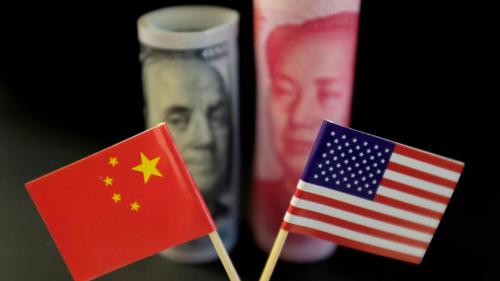

WASHINGTON D.C. -- Chairman John Moolenaar (R-MI) of the House Select Committee on the Chinese Communist Party and Chairman Michael McCaul (R-TX) of the House Committee on Foreign Affairs requested a classified briefing from the Biden administration as the chairmen remain concerned that without robust protections, sensitive U.S.-origin technology transferred as part of the Microsoft-G42 partnership could end up the CCP’s hands.
WASHINGTON D.C. -- Chairman John Moolenaar (R-MI) of the House Select Committee on the Chinese Communist Party and Chairman Michael McCaul (R-TX) of the House Committee on Foreign Affairs requested a classified briefing from the Biden administration as the chairmen remain concerned that without robust protections, sensitive U.S.-origin technology transferred as part of the Microsoft-G42 partnership could end up the CCP’s hands.